

For U.S. healthcare professionals. The publications on this page include scientific information about SYLKE® Skin Closure that is not contained in its current FDA-required labeling. SYLKE® Skin Closure has not been approved or cleared by FDA for these uses, and the safety and effectiveness of SYLKE® Skin Closure for these uses have not been established. For indications, contraindications, warnings, and precautions, see the Instructions for Use at sylke.com/ifu.
Peer-Reviewed Scientific Literature
Orthopedic Surgery
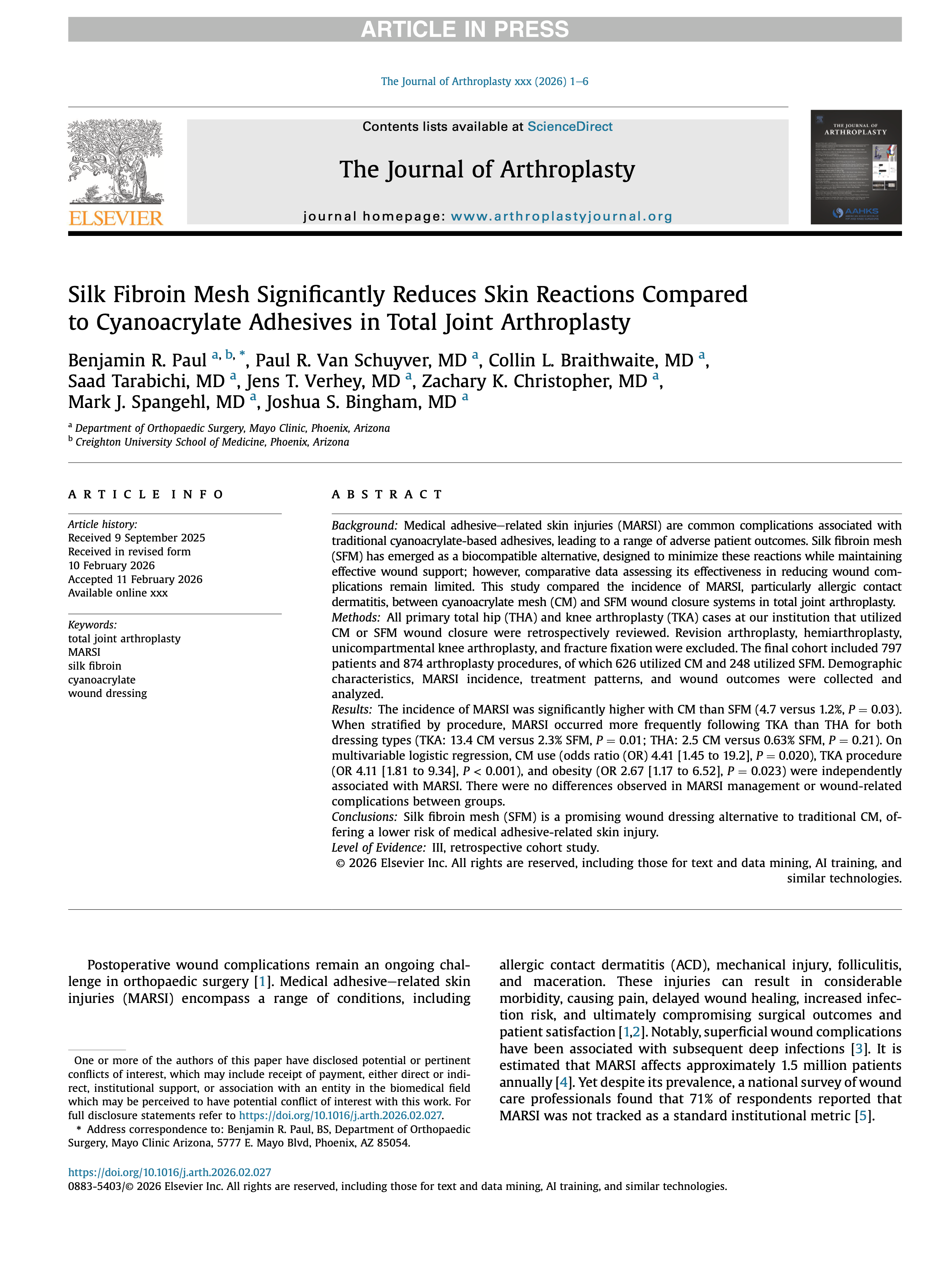
"Silk Fibroin Mesh Significantly Reduces Skin Reactions Compared to Cyanoacrylate Adhesives in Total Joint Arthroplasty"
Retrospective Cohort Study · The Journal of Arthroplasty · 2026
Paul BR, Van Schuyver PR, Braithwaite CL, Tarabichi S, Verhey JT, Christopher ZK, Spangehl MJ, Bingham JS. J Arthroplasty. 2026;doi:10.1016/j.arth.2026.02.027.
Study Design: Retrospective cohort study at Mayo Clinic Arizona.
Sample Size: N = 874 total joint arthroplasty procedures from 797 patients (cyanoacrylate mesh: n=626; silk fibroin mesh: n=248). Primary TKA and THA from January 2019 to July 2025.
Primary Endpoint: Incidence of medical adhesive-related skin injury (MARSI), particularly allergic contact dermatitis (ACD), between cyanoacrylate mesh (CM) and silk fibroin mesh (SFM) wound closure systems.
Key Results: MARSI was 4.7% in the CM group vs. 1.2% in the SFM group (P = 0.03). When stratified by procedure, TKA MARSI was 13.4% CM vs. 2.3% SFM (P = 0.01); THA MARSI was 2.5% CM vs. 0.63% SFM (P = 0.21). On multivariable logistic regression, CM dressing (OR 4.41 [1.45–19.2], P = 0.020), TKA procedure (OR 4.11 [1.81–9.34], P < 0.001), and obesity (OR 2.67 [1.17–6.52], P = 0.023) were independently associated with MARSI. No differences in wound-related complications or MARSI management between groups.
Adverse Events: Three cases of MARSI (all ACD) occurred in the SFM group (1.2%). No wound dehiscence, wound drainage, or surgical site infections were observed in the SFM group.
Limitations: Retrospective design; single-institution; non-randomized; unequal group sizes and procedure distribution between cohorts (higher TKA proportion in SFM group, higher THA proportion in CM group); SFM patients were significantly older; limited event rate prevented modeling of interaction effects; interoperator variability may affect reproducibility.
Author Disclosure: One or more of the authors have disclosed potential or pertinent conflicts of interest, which may include receipt of payment, either direct or indirect, institutional support, or association with an entity in the biomedical field which may be perceived to have potential conflict of interest with this work. For full disclosure statements refer to the DOI link. No authors were employees of, consultants to, or received compensation from Sylke, Inc. in connection with this work.
This summary was developed by Sylke, Inc.

"Silk Fibroin Wound Dressing Significantly Decreases Hypersensitivity Compared to 2-Octyl Cyanoacrylate Mesh Dressing"
Retrospective Cohort Study · The Journal of Arthroplasty · 2025
Aastroem KIM, Sarpong NO, Neuwirth AL, Cooper HJ, Geller JA, Shah RP. J Arthroplasty. 2025;doi:10.1016/j.arth.2025.06.071.
Study Design: Retrospective, single-surgeon cohort study at Columbia University Irving Medical Center.
Sample Size: N = 261 consecutive total joint arthroplasty patients (silk fibroin: n=58; 2-octyl cyanoacrylate mesh: n=203). Included TKA, THA, UKA, and revision TKA/THA.
Primary Endpoint: Hypersensitivity, delayed wound healing, wound edge separation, reoperations within 90 days, dressing application time, and cost.
Key Results: Hypersensitivity was 0% (0/58) in the silk group vs. 9.9% (20/203) in the mesh group (P = 0.009). Delayed wound healing was 0% silk vs. 4.9% mesh (P = 0.12, not statistically significant). No wound edge separation was observed in knee cases in either group. No differences in reoperations. Average cost savings of $465.91 per case with silk. Silk eliminated an average 3.7 minutes of OR time by removing the glue-drying step.
Adverse Events: No hypersensitivity, wound edge separation, or delayed wound healing in the silk group. Hypersensitivity occurred in 9.9% of the mesh group.
Limitations: Retrospective design; single-surgeon, single-center; non-randomized; unequal group sizes (58 vs. 203); silk group had no revision cases while mesh group included revisions; results may not be generalizable.
Author Disclosure: One or more of the authors have disclosed potential or pertinent conflicts of interest, which may include receipt of payment, either direct or indirect, institutional support, or association with an entity in the biomedical field which may be perceived to have potential conflict of interest with this work. For full disclosure statements refer to the DOI link. No authors were employees of, consultants to, or received compensation from Sylke, Inc. in connection with this work.
Read The Study →
This summary was developed by Sylke, Inc.
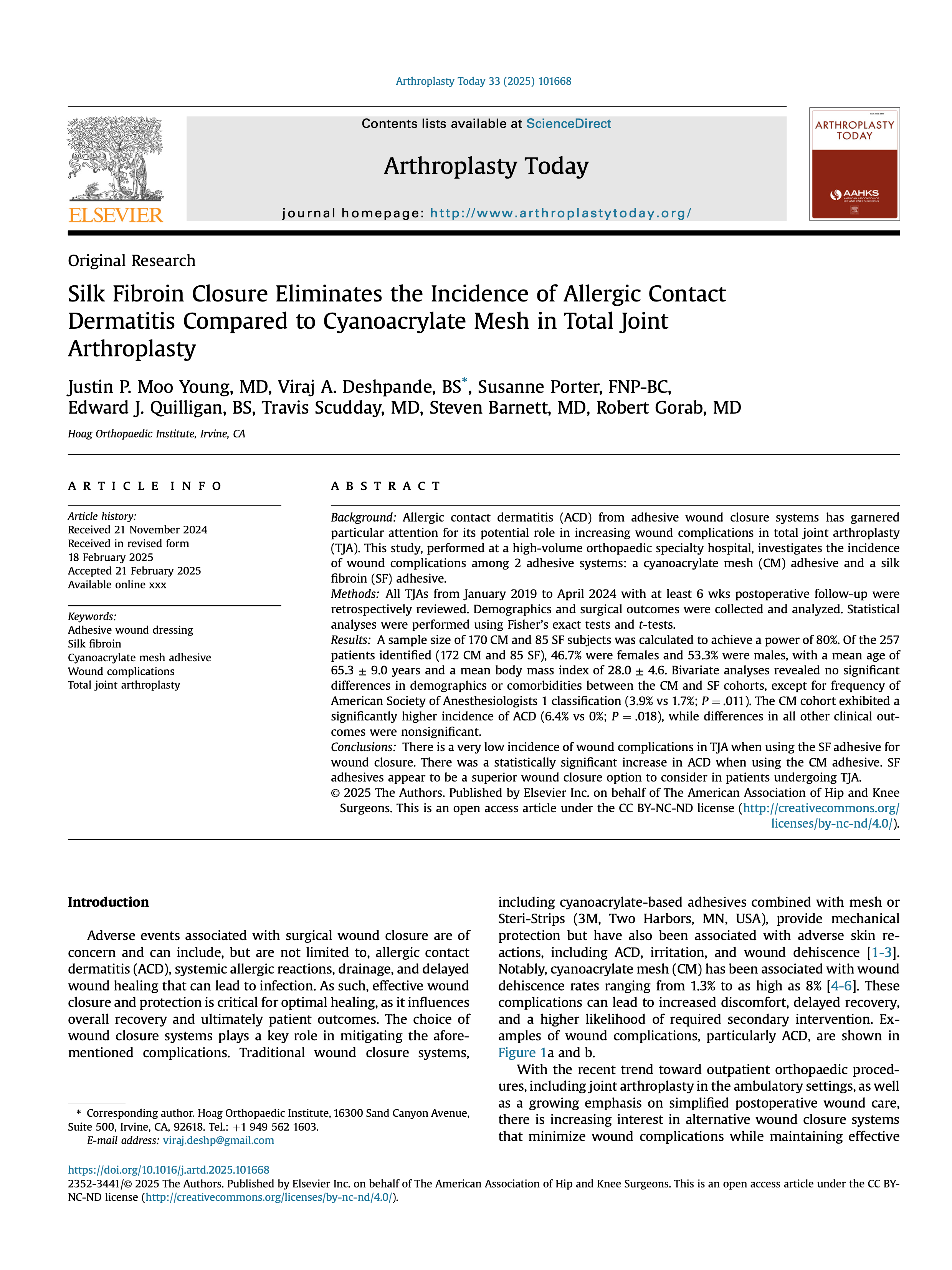
"Silk Fibroin Closure Eliminates the Incidence of Allergic Contact Dermatitis Compared to Cyanoacrylate Mesh in Total Joint Arthroplasty"
Retrospective Cohort Study · Arthroplasty Today · 2025
Moo Young JP, Deshpande VA, Porter S, Quilligan EJ, Scudday T, Barnett S, Gorab R. Arthroplast Today. 2025;33:101668.
Study Design: Retrospective cohort study at Hoag Orthopaedic Institute, a high-volume orthopaedic specialty hospital in Irvine, CA.
Sample Size: N = 257 total joint arthroplasty patients (cyanoacrylate mesh: n=172; silk fibroin: n=85). All TJAs from January 2019 to April 2024 with at least 6 weeks of follow-up.
Primary Endpoint: Incidence of allergic contact dermatitis (ACD) and wound complications between cyanoacrylate mesh (CM) and silk fibroin (SF) dressings.
Key Results: ACD was 6.4% in the CM group vs. 0% in the SF group (P = .018). No significant differences in other clinical outcomes between groups.
Adverse Events: No ACD or wound-related complications in the silk fibroin group.
Limitations: Retrospective design; single-center; non-randomized; historical comparison across a multi-year period (January 2019 to April 2024); dressing availability and surgical technique may have evolved during the study period; unequal group sizes. This article has a published correction (Arthroplast Today. 2025;33:101733).
Author Disclosure: R. Gorab received royalties from and is a paid consultant for DePuy Synthes Products, Inc. S. Barnett received royalties from and is a paid consultant for DePuy Synthes Products, Inc. and OMNIlife science, Inc. S. Porter and T. Scudday are paid consultants for Medical Device Business Services, Inc. and/or OMNIlife science, Inc. All other authors declare no potential conflicts of interest. Full disclosure statements are available in the publication. No authors were employees of, consultants to, or received compensation from Sylke, Inc. in connection with this work.
Read The Study →
This summary was developed by Sylke, Inc.
Plastic Surgery
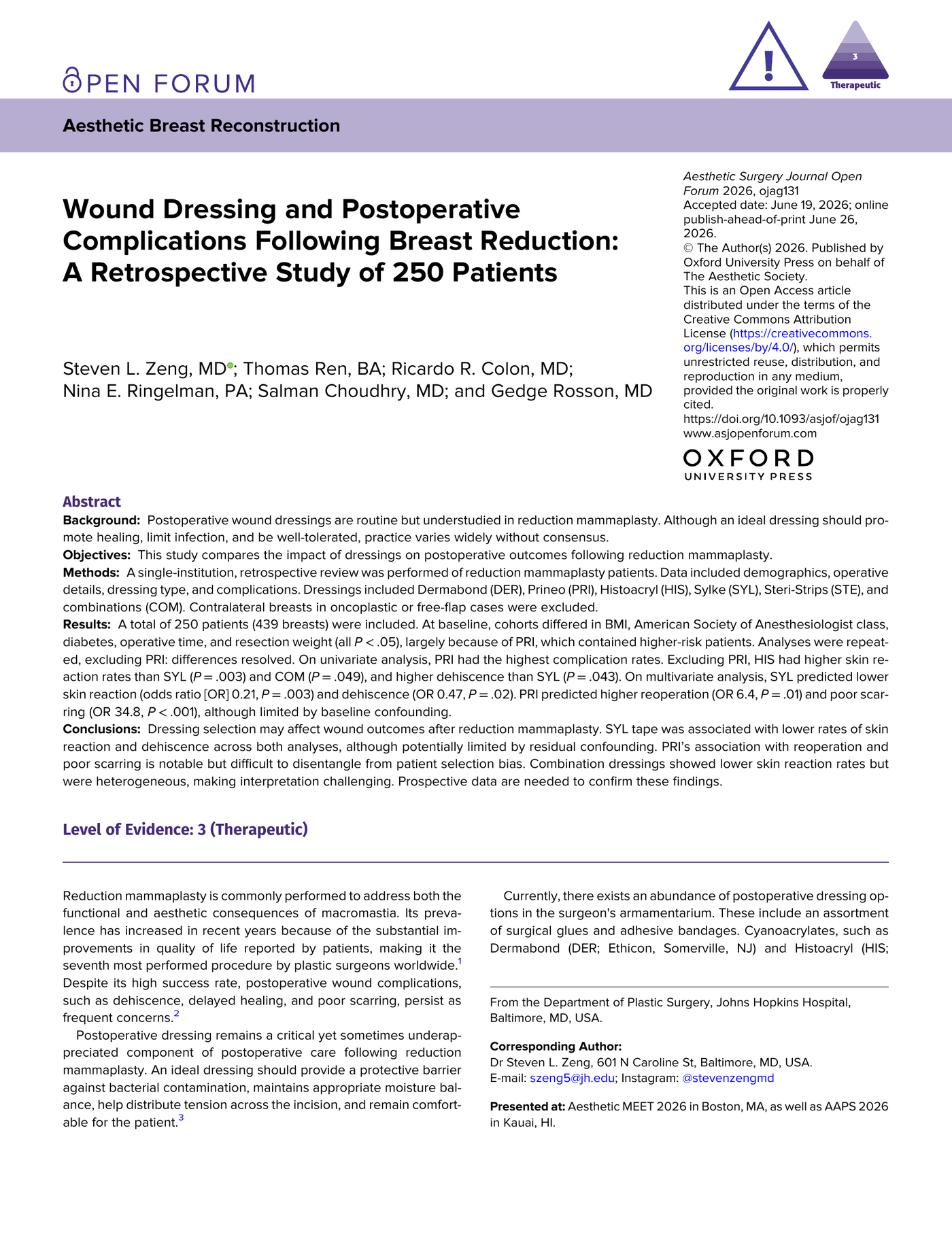
"Wound Dressing and Postoperative Complications Following Breast Reduction: A Retrospective Study of 250 Patients"
Retrospective Study · ASJ Open Forum · 2026
Zeng SL, Ren T, Colon RR, Ringelman NE, Choudhry S, Rosson G. Aesthet Surg J Open Forum. 2026;8:ojag131. doi:10.1093/asjof/ojag131.
Study Design: Single-institution retrospective study (Department of Plastic Surgery, Johns Hopkins Hospital) comparing six wound dressing strategies following reduction mammaplasty: Dermabond (DER), Prineo (PRI), Histoacryl (HIS), Sylke (SYL), Steri-Strips (STE), and combination dressings (COM).
Sample Size: N = 250 patients (439 breasts) undergoing bilateral or unilateral reduction mammaplasty.
Primary Endpoint: Incidence of postoperative complications, including skin reaction, wound dehiscence, infection, reoperation, and poor scarring.
Key Results: At baseline, cohorts differed in BMI, ASA class, diabetes, operative time, and resection weight (all P < 0.05), largely due to the Prineo cohort, which contained higher-risk patients; differences resolved when Prineo was excluded. On univariate analysis excluding Prineo, Histoacryl had higher skin reaction rates than Sylke (P = 0.003) and higher dehiscence than Sylke (P = 0.043). On multivariate analysis, Sylke predicted lower skin reaction (OR 0.21, P = 0.003) and lower wound dehiscence (OR 0.47, P = 0.02); Prineo predicted higher reoperation (OR 6.4, P = 0.01) and poor scarring (OR 34.8, P < 0.001), though limited by baseline confounding. The authors concluded that dressing selection may affect wound outcomes after reduction mammaplasty and that Sylke tape was associated with lower rates of skin reaction and dehiscence across both analyses, though potentially limited by residual confounding.
Adverse Events: Postoperative complications (skin reaction, wound dehiscence, infection, reoperation, and poor scarring) were the study endpoints and are reported under Key Results; rates by dressing are in the full publication.
Limitations: Retrospective, single-institution design; dressing selection was based on surgeon preference, introducing potential selection bias and unmeasured confounders; baseline differences between cohorts; residual confounding cannot be excluded; associations observed in the Prineo cohort are difficult to disentangle from patient selection; heterogeneity of combination dressings limits interpretation; the authors state that prospective data are needed to confirm these findings.
Author Disclosure: The authors declared no potential conflicts of interest with respect to the research, authorship, and publication of this article. The authors received no financial support for the research, authorship, and publication of this article, including payment of the article processing charge.
This summary was developed by Sylke, Inc.
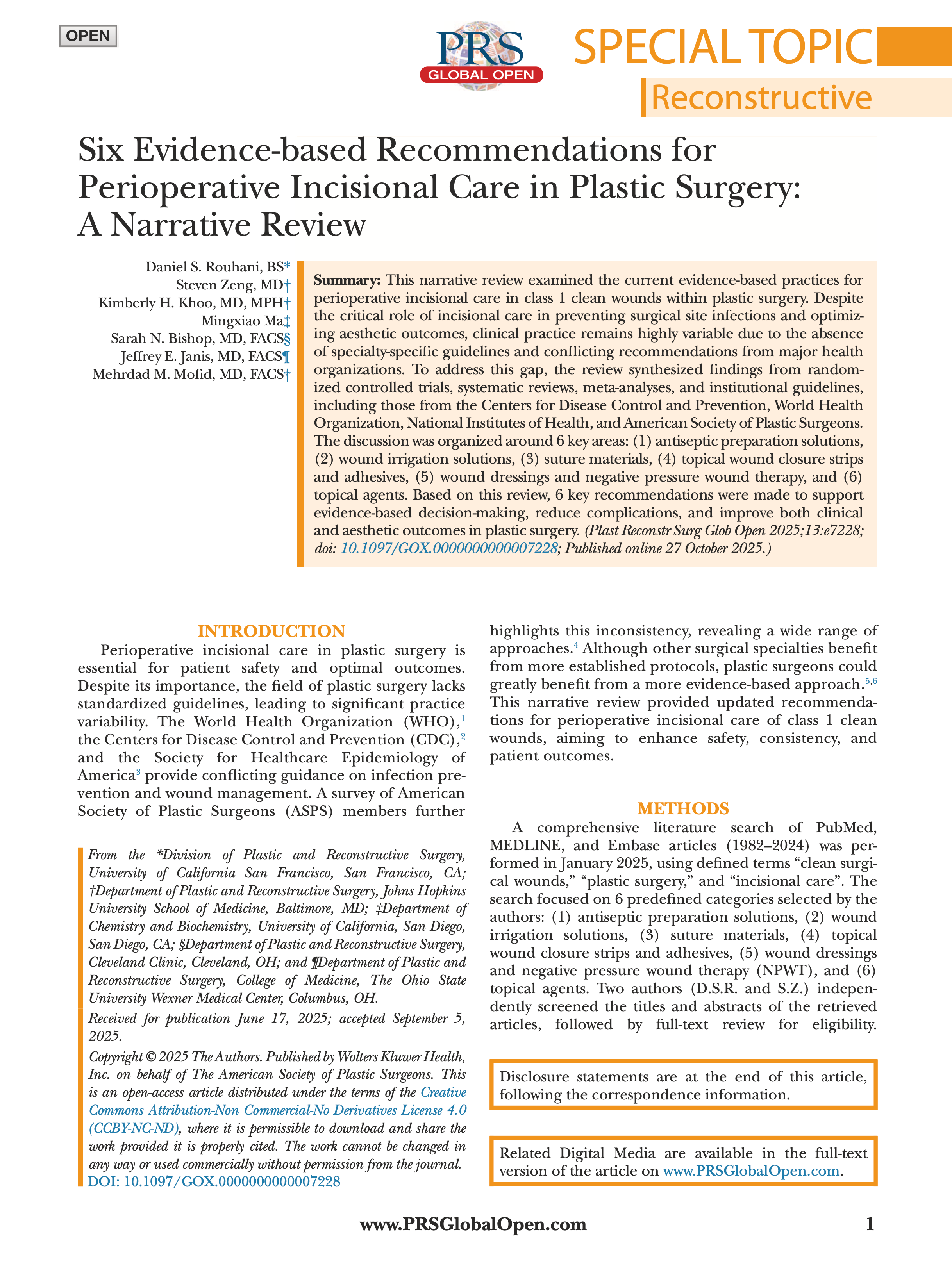
"Six Evidence-based Recommendations for Perioperative Incisional Care in Plastic Surgery: A Narrative Review"
Narrative Review · PRS Global Open · 2025
Rouhani DS, Zeng S, Khoo KH, Ma M, Bishop SN, Janis JE, Mofid MM. Plast Reconstr Surg Glob Open. 2025;13:e7228. doi:10.1097/GOX.0000000000007228.
Study Design: Narrative review examining current evidence-based practices for perioperative incisional care in class 1 clean wounds within plastic surgery.
Sample Size: Not applicable (review article synthesizing existing literature).
Primary Endpoint: Not applicable. The review synthesized six evidence-based recommendations for incisional care.
Key Results: The review examined current evidence across wound closure techniques, dressing selection, and perioperative skin management. Specific recommendations are detailed in the full publication.
Adverse Events: Not applicable (review article).
Limitations: Narrative review, not a systematic review or meta-analysis; subject to selection and interpretation bias inherent in the narrative review format; recommendations reflect the authors' synthesis of available evidence.
Author Disclosure: Daniel S. Rouhani serves as a consultant for Sylke, Inc. Dr. Janis receives royalties from Thieme Medical Publishers and Springer Publishing. Dr. Mofid is the founder and a shareholder of Sylke, Inc. The other authors have no financial interest to declare in relation to the content of this article. Full disclosure statements are available in the publication.
Read The Study →
This summary was developed by Sylke, Inc.
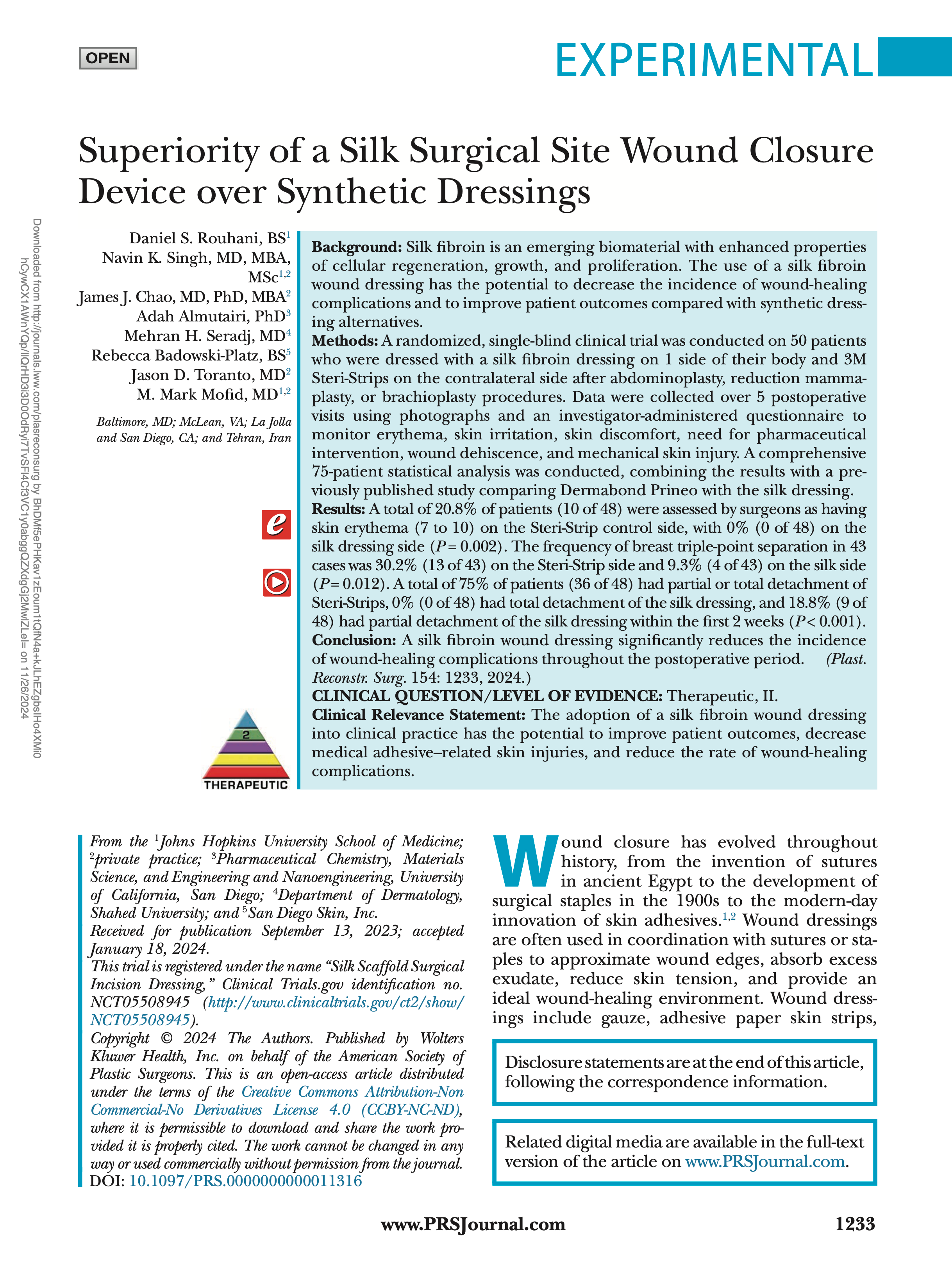
"Superiority of a Silk Surgical Site Wound Closure Device Over Synthetic Dressings"
Prospective RCT · Plastic & Reconstructive Surgery · 2024
Rouhani DS, Singh NK, Chao JJ, Almutairi A, Seradj MH, Badowski-Platz R, Toranto JD, Mofid MM. Plast Reconstr Surg. 2024;154(6):1233-1244.
Study Design: Prospective, randomized, single-blinded, split-body clinical trial. Each patient served as their own internal control with silk dressing on one side and 3M Steri-Strips on the contralateral side. A combined 75-patient analysis pooled results with the prior Dermabond Prineo trial.
Sample Size: N = 50 (abdominoplasty, reduction mammaplasty, brachioplasty). Combined analysis: N = 75.
Primary Endpoint: Erythema, skin irritation, skin discomfort, need for pharmaceutical intervention, wound dehiscence, and mechanical skin injury.
Key Results: 20.8% of patients (10/48) had surgeon-assessed erythema scores of 7-10 on the Steri-Strip side vs. 0% (0/48) on the silk side (P = 0.002). Breast triple-point separation occurred in 30.2% (13/43) on the Steri-Strip side vs. 9.3% (4/43) on the silk side (P = 0.012). Within the first 2 weeks, 75% (36/48) of patients had partial or total detachment of Steri-Strips; 0% (0/48) had total detachment and 18.8% (9/48) had partial detachment of the silk dressing (P < 0.001).
Adverse Events: No serious adverse events on the silk dressing side. Skin irritation requiring pharmaceutical intervention was reported on the Steri-Strip side; specific rates are in the full publication.
Limitations: Single-center; single-blinded (investigators not blinded); split-body design limits generalizability; procedures limited to plastic surgery body-contouring cases; combined 75-patient analysis pools data from two studies with different comparators. Registered at ClinicalTrials.gov (NCT05508945).
Author Disclosure: M. Mark Mofid, MD, FACS, has a financial interest in US patents 11,311,641 and 11,583,607, which describe animal bioprotein scaffold wound dressings. The other authors have no conflicts of interest with respect to the research, authorship, or publication of this article. No funding was received from any agencies in the public, commercial, or not-for-profit sectors. M. Mark Mofid, MD, FACS, is the founder and CEO of Sylke, Inc.
This summary was developed by Sylke, Inc.
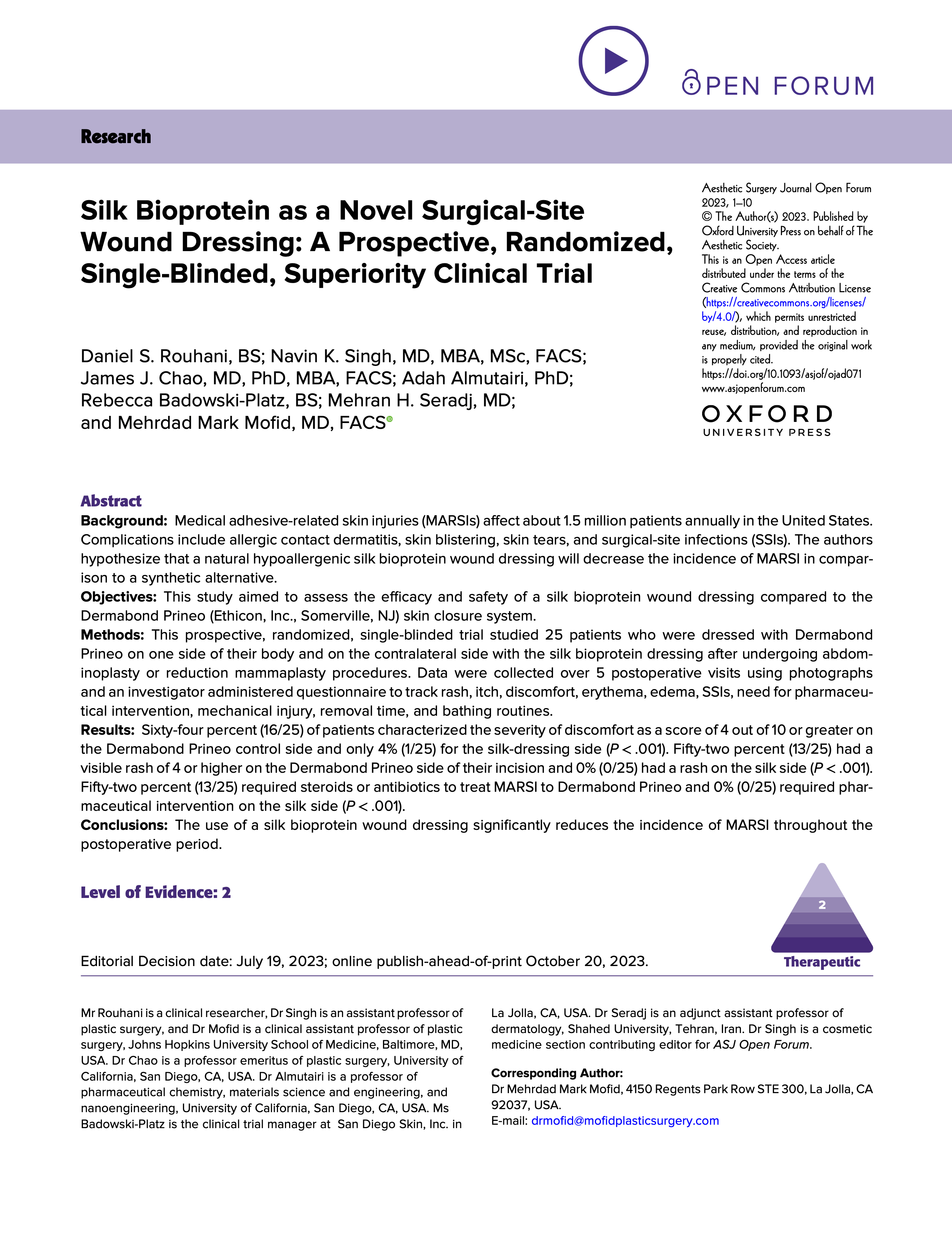
"Silk Bioprotein as a Novel Surgical-Site Wound Dressing"
Prospective RCT · ASJ Open Forum · 2023
Rouhani DS, Singh NK, Chao JJ, Almutairi A, Badowski-Platz R, Seradj MH, Mofid MM. Aesthet Surg J Open Forum. 2023;5:ojad071.
Study Design: Prospective, randomized, single-blinded, split-body superiority trial. Each patient served as their own internal control with silk dressing on one side and Dermabond Prineo on the contralateral side.
Sample Size: N = 25 (abdominoplasty, belt lipectomy, mastopexy, or reduction mammaplasty)
Primary Endpoint: Incidence of medical adhesive-related skin injuries (MARSI) including discomfort, itching, rash, erythema, edema, and need for pharmaceutical intervention.
Key Results: 64% of patients (16/25) reported discomfort of 4/10 or greater on the Dermabond Prineo side vs. 4% (1/25) on the silk side (P < .001). 52% (13/25) had visible rash of 4 or higher on the Dermabond Prineo side vs. 0% (0/25) on the silk side (P < .001).
Adverse Events: No adverse events on the silk dressing side. 52% of patients required corticosteroid or antibiotic treatment for MARSI on the Dermabond Prineo side.
Limitations: Small sample size (N=25); single-center; split-body design limits generalizability to non-bilateral procedures; single-blinded (investigators not blinded); prototype version of the silk dressing was used, not the commercial product.
Author Disclosure: M. Mark Mofid, MD, FACS, has a financial interest in US patent No. 11,311,641 and No. 11,583,607 describing animal bioprotein scaffold wound dressings. N.K. Singh, MD, is a cosmetic medicine section contributing editor for ASJ Open Forum. The remaining authors declared no potential conflicts of interest. The authors received no financial support for the research, authorship, and publication of this article, including payment of the article processing charge. M. Mark Mofid, MD, FACS, is the founder and CEO of Sylke, Inc.
Read The Study →
This summary was developed by Sylke, Inc.
Important U.S. Healthcare Professional Information
Intended Audience & Not Medical Advice
The content on this page is intended for U.S. healthcare professionals. It is provided for scientific and educational purposes only and is not medical advice, diagnosis, or treatment. Clinical decisions should be based on each clinician’s independent medical judgment and the needs of the individual patient. Patients with questions about their care should consult a licensed healthcare professional.
Regulatory Status
SYLKE® Skin Closure is a U.S. FDA Class I medical device exempt from 510(k) premarket notification. FDA registration and listing do not denote FDA approval or endorsement, and no FDA approval, clearance, or endorsement is stated or implied. Sylke, Inc. promotes SYLKE® Skin Closure only for the uses described in its current FDA-required labeling. A paper copy of the Instructions for Use (IFU) is included in every box; always read the current IFU before use, also available at sylke.com/ifu.
Scientific Information Beyond Labeling
This page presents peer-reviewed publications that include scientific information not contained in the current FDA-required labeling for SYLKE® Skin Closure, such as comparisons with other wound closure products and outcomes in specific procedures. SYLKE® Skin Closure has not been approved or cleared by FDA for these uses, and the safety and effectiveness of SYLKE® Skin Closure for these uses have not been established. Sylke, Inc. does not recommend or suggest the use of SYLKE® Skin Closure outside its labeling. Findings from individual studies, centers, or patient populations may not be generalizable, and individual results vary.
Study Summaries & Disclosures
Each study summary on this page was developed by Sylke, Inc. and presents the study design, sample size, endpoints, key results, adverse events, limitations, and author disclosures, including any funding or financial relationships with Sylke, Inc. Summaries are provided alongside a link to the full publication and do not replace it; the full publication should be read in its entirety.
Risk Information & Adverse Event Reporting
All medical devices carry risks. Before use, review the contraindications, warnings, and precautions in the current IFU at sylke.com/ifu. To report an adverse event or product complaint, contact Sylke, Inc. at quality@sylke.com or +1 (858) 727-9553. You may also report directly to FDA through MedWatch at www.fda.gov/medwatch or 1-800-FDA-1088.
Requests for Scientific Information
Healthcare professionals may request additional scientific or medical information about SYLKE® Skin Closure from Sylke, Inc. Medical Affairs at medicalaffairs@sylke.com.
Third-Party Publications & Links
Publications and websites linked from this page are owned and maintained by independent third parties, including journal publishers. Sylke, Inc. does not control and is not responsible for their content, and does not adopt any statement that is inconsistent with the FDA-required labeling. Linked content may be updated or withdrawn by its publisher without notice.
Availability Outside the U.S.
This page is intended for U.S. audiences only. Product availability, indications, labeling, and trade names vary by country. Visitors outside the United States should refer to the Instructions for Use for their region, European Union (CE) or International, and visit our International page.
Trademarks & Intellectual Property
SYLKE® is a registered trademark of Sylke, Inc. SYLKE® Skin Closure is protected by patents; see our Patents page. All other product names and trademarks, including those of comparator products referenced in the publications, are the property of their respective owners. Their use does not imply any affiliation with or endorsement by those owners.